Japan for Beginners: Everything You Need to Plan Before You Go
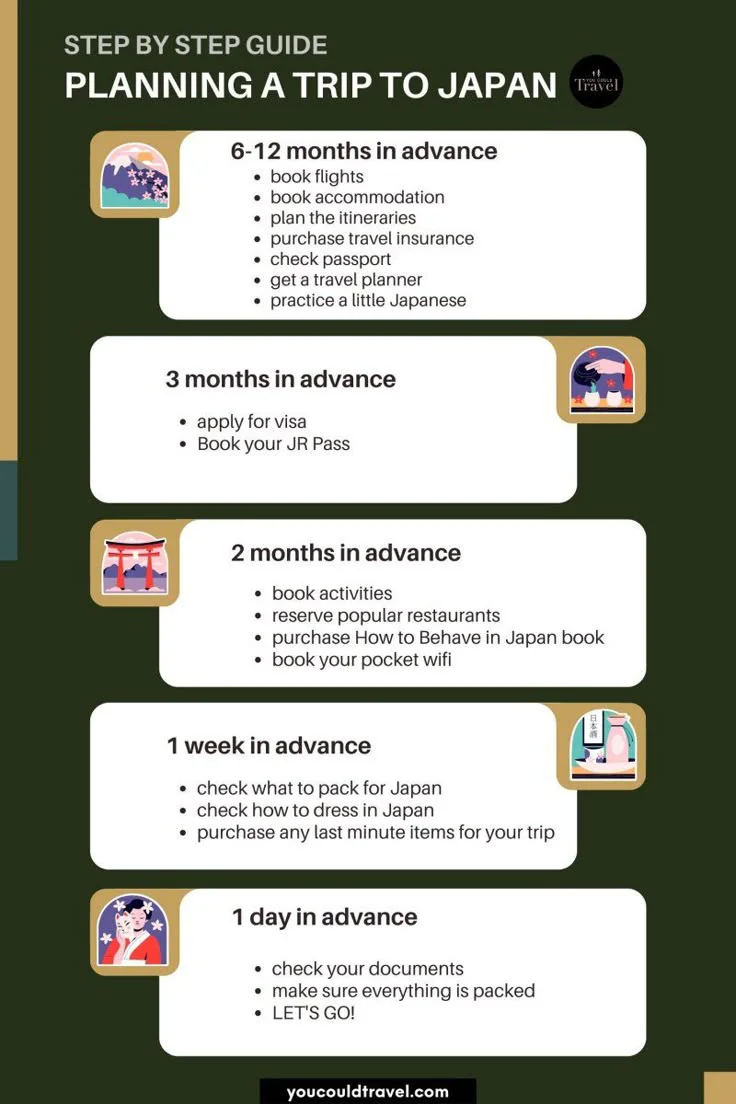
Planning your first trip to Japan can feel overwhelming. There's so much to see, so many logistics to figure out, and countless guides offering conflicting advice. But here's the truth: planning a Japan trip doesn't have to be complicated. In fact, if you break it down into manageable steps, it becomes quite straightforward—and the reward is an unforgettable adventure in one of the world's most fascinating countries.
This guide will walk you through everything you need to plan before you go, from deciding when to visit and how long to stay, to choosing your destinations, booking accommodations, and understanding the practical details that will make your trip smooth. By the end, you'll have a clear roadmap for your Japan adventure.
Suggested experience · Related to: Step 1: Decide When to Go

Tokyo: Imperial Palace and Shogun Historical Walking Tour
Step 1: Decide When to Go
The timing of your trip will shape your budget, your photos, and even how crowded your experience feels. Japan has four very distinct seasons, and each one offers something different.
Spring (March to May): Famous for cherry blossoms. Parks fill with soft pink blooms, the weather is mild, and the atmosphere feels almost celebratory. It's beautiful, but it's also peak season. Flights and hotels cost more, and major attractions are busy. If this is your dream, book early and expect crowds.
Summer (June to August): Hot and humid, especially in cities like Tokyo and Osaka. But it's also festival season. Fireworks, street food stalls, and traditional matsuri bring energy everywhere. July to early September is also the only time you can officially climb Mount Fuji. If you don't mind the heat, summer can be lively and slightly less crowded with international tourists.
Autumn (September to November): For many travelers, autumn is the best time to visit Japan. The air turns crisp, maple leaves glow red and orange, and the weather is comfortable for walking. It's still popular, especially in late November, but often less intense than cherry blossom season.
Winter (December to February): Fewer tourists and lower hotel prices. Cities feel calmer, and northern Japan offers snow and ski resorts. If you enjoy peaceful sightseeing and don't mind cold weather, winter can be surprisingly rewarding.
Pro tip: Try to avoid Golden Week (late April to early May) and the New Year period. Domestic travel surges, trains fill up, and accommodation becomes harder to secure. Choosing shoulder periods, like late May or late November, often gives you better value and fewer crowds.
Suggested experience

Tokyo Customized Half-Day Tour with Licensed Local Guide
Step 2: Decide How Long to Stay
Your work and holiday schedule might make this decision for you, but if you have a choice, here's what to consider:
- 7-10 days: Enough for Tokyo and Kyoto with maybe a quick stop in Osaka. You'll see the highlights but will need to move quickly.
- 10-14 days: Ideal for most first-timers. You can do Tokyo, Kyoto, Osaka, and perhaps Nara or a day trip to Mount Fuji area without feeling rushed.
- 14-21 days: Allows for a more relaxed pace and the chance to add destinations like Hiroshima, Takayama, Kanazawa, or even a few days in Okinawa.
- 3+ weeks: Perfect for slow travel, exploring off-the-beaten-path regions, or doing one of Japan's famous pilgrimage trails.
The key is to be realistic about what you can comfortably see. Japan may look small on a map, but every city has layers worth exploring.
Suggested experience

Yokohama Walking Tour Explore Japan Gateway to the World
Step 3: Decide Where to Go
For your first visit, you should visit Tokyo, Kyoto, and perhaps 1-2 other places. Trying to see the entire country in one trip is a recipe for exhaustion.
The classic first-timer route:
- Tokyo (3-5 days): Your introduction to modern Japan. Explore Shibuya Crossing, Asakusa's Senso-ji Temple, Shinjuku nightlife, and themed neighborhoods like Akihabara. Tokyo blends tradition and technology in one city.
- Kyoto (2-4 days): Temples, shrines, bamboo forests, and traditional streets. Visit Fushimi Inari, Arashiyama, and Gion. Kyoto gives your Japan trip cultural depth and slower moments.
- Osaka (1-2 days): Street food, bright lights, and a playful atmosphere. It's close to Kyoto and easy to add without much travel time.
Optional additions:
- Nara (1 day): Famous for its deer park and giant Buddha statue. Easy as a day trip from Kyoto or Osaka.
- Hakone or Kawaguchiko (1-2 days): Onsen (hot springs) and potential views of Mount Fuji.
- Hiroshima (1-2 days): History and the nearby sacred island of Miyajima with its floating torii gate.
- Takayama/Kanazawa (2-3 days): Traditional towns with preserved historic districts and a more relaxed pace.
If you want to get off the beaten track, consider Kyushu, Shikoku, or northern Honshu—but save these for a second or third visit when you're more comfortable with Japan travel.
Suggested experience

Tokyo Okutama Day Trip Tour
Step 4: Set a Realistic Budget
Your budget shapes everything else. The good news? Japan is flexible. You can travel comfortably without overspending if you plan smart.
Break it into four core costs:
Flights: Peak seasons like cherry blossom spring and autumn foliage push prices up. If you're serious about traveling affordably, book early and stay flexible with dates.
Accommodation: Japan offers capsule hotels, business hotels, hostels, and traditional ryokans. Rooms are compact but efficient. Staying near major train stations saves both time and money. For your first trip, prioritize location over luxury.
Transport: Bullet trains are fast but not cheap. Calculate whether a Japan Rail Pass actually fits your route before buying. For city travel, use an IC card like Suica or Pasmo. Public transport is reliable and cost-effective.
Food: Japan is surprisingly affordable when it comes to food. Ramen, curry rice, sushi lunches, and convenience store meals keep daily costs reasonable. You can eat well without fine dining every night.
The best way to visit Japan on a balanced budget is simple: use public transport, eat local, and avoid peak travel windows. Once you estimate your daily spend, add a small buffer. That extra margin makes your Japan trip feel relaxed instead of tightly calculated.
Suggested experience · Related to: Step 5: Book Flights

Tokyo Tower Japan Admission E-Ticket
Step 5: Book Flights
Once you decide when to go and how long to stay, it's time to buy plane tickets. For most people, flying into Tokyo makes sense.
Tokyo has two airports:
- Narita (NRT): About 60-90 minutes from central Tokyo. More international flight options.
- Haneda (HND): About 30 minutes from central Tokyo. Closer and more convenient, but fewer international routes.
If your route ends in Osaka, consider flying out from Kansai Airport to avoid backtracking. Compare round-trip versus multi-city tickets and book once prices feel reasonable rather than waiting endlessly for the lowest fare.
Pro tip: Try to land in the afternoon if possible. After a long flight, arriving with daylight makes navigating trains and checking into your hotel much easier.
Step 6: Reserve Accommodations
Location matters more than room size. In Tokyo, stay near major train hubs like Shinjuku, Shibuya, Ueno, or Tokyo Station. In Kyoto, choose areas near downtown, Gion, or Kyoto Station for easier access to buses and trains.
Accommodation types:
- Business hotels: Reliable and practical. Clean, compact rooms with everything you need for a comfortable stay.
- Ryokans: Traditional Japanese inns with tatami floors, futon beds, and often Japanese breakfasts. A unique cultural experience.
- Capsule hotels: Affordable and surprisingly comfortable for short stays. Great for solo travelers.
- Hostels: Budget-friendly with social atmospheres. Many offer private rooms if you don't want a dorm.
If you're traveling during peak seasons, book accommodation at least two to three months ahead. Flexible cancellation options are useful in case prices drop or plans shift.
Suggested experience

Tokyo Private Day Trip - Enjoy Your First-Time Visit to Tokyo!
Step 7: Decide on Transportation
You'll do most of your long-distance travel on Japan's shinkansen (bullet trains). They're fast, comfortable, and run like clockwork.
Japan Rail Pass (JRP): After the 2023 price increase, the JRP is no longer a good deal for most travelers. It only makes sense for budget travelers who plan to do a lot of train travel. Calculate your individual ticket costs using Google Maps or official JR websites before deciding.
IC Cards: For city transport, get an IC card (Suica/Pasmo in Tokyo, ICOCA in Osaka/Kyoto). These prepaid cards work on trains, subways, buses, and can even be used at vending machines and some stores. If you have an iPhone, you can add a digital Suica directly to Apple Wallet.
Luggage shipping: Japan has fast, cheap, and reliable overnight luggage shipping services. You can send your luggage from hotel to hotel, making train travel much easier. This is especially useful if you're moving between cities frequently.
Suggested experience

Modern Japanese History Tour in Tokyo
Step 8: Get the Right Kind of Luggage
Shinkansen don't have much luggage space, and you'll be doing a lot of walking. The best approach is a light shoulder bag for daily necessities and a wheelie bag for the rest.
Consider using Japan's luggage forwarding service to send large bags between hotels while you travel with just a small day pack. This makes train travel much more comfortable.
Step 9: Arrange Internet Access
You'll want mobile data while in Japan for navigation, translation, and staying connected.
eSIM: If you have a newer unlocked phone, an eSIM is the way to go. No physical card needed, and you can set it up before you leave home.
Physical SIM: If your phone is unlocked but older, a physical SIM card works well. You can pick one up at the airport upon arrival.
Pocket WiFi: If your phone is locked to a specific carrier, your only choice is a pocket WiFi device. These can be rented at the airport.
Having internet from the moment you land makes everything easier—navigating trains, finding your hotel, translating menus, and more.
Suggested experience · Related to: Step 10: Book Tours and Activities

Tokyo Castle, Imperial Palace, Shogun & Garden Walking Tour
Step 10: Book Tours and Activities
Once you've got the logistics sorted, it's time to book some experiences. Popular options include:
- Walking tours of Tokyo, Kyoto, and Nara
- Sumo stable visits to watch morning practice
- Cooking classes to learn how to make Japanese dishes
- Tea ceremonies in traditional settings
- Amusement park tickets (like Tokyo Disney or Universal Studios Japan)
Booking in advance ensures you get a spot, especially for popular experiences that have limited capacity.
Step 11: Learn Basic Etiquette
Understanding a few cultural norms will help you navigate Japan respectfully:
- Tipping: Japan has no tipping culture. Good service is expected as standard.
- Queuing: The Japanese take queuing seriously. Form neat lines everywhere.
- Public transport: Don't eat or drink on trains (except on shinkansen). Keep conversations quiet.
- Shoes: You'll remove your shoes frequently at temples, ryokan, and some restaurants. Wear shoes that are easy to slip on and off.
- Trash: Public trash cans are rare. Carry your trash with you until you find one or return to your hotel.
Recommended video
20 Things You Should Know Before Visiting Japan | Japan Travel Tips
A visual guide that complements the “Step 11: Learn Basic Etiquette” section with useful context for your visit.
Video by Japanese language learning with animeStep 12: Learn a Few Japanese Phrases
While English is spoken in major tourist areas, learning a few basic phrases will greatly enhance your experience:
- Hello: Konnichiwa
- Thank you: Arigatou
- Excuse me / Sorry: Sumimasen
- Yes: Hai
- No: Iie
- How much? Ikura desu ka?
"Sumimasen" is particularly useful—it works for getting attention, apologizing, and asking for help.
Step 13: Download Essential Apps
Before you leave, download these essential apps:
- Google Maps: Essential for navigation, train schedules, and finding places
- Google Translate: Invaluable for overcoming language barriers, especially with the camera translation feature
- Hyperdia or Navitime: Train schedule and route planning apps
- Japan Official Travel App: From the Japan National Tourism Organization
Step 14: Check Documentation Requirements
Check visa requirements for your nationality before traveling. Many countries have visa-exempt status for short tourist stays (typically 90 days), but requirements change, so verify current regulations.
Ensure your passport is valid for at least six months beyond your planned departure date. Foreign visitors are required by law to carry their passport with them at all times in Japan.
Suggested experience

Tokyo Castle & Imperial Palace - Shogun Walking Tour
Step 15: Consider Travel Insurance
Japan has excellent healthcare facilities, but medical treatment can be expensive for foreign visitors. Many hospitals require a deposit upon admission. Travel insurance is essential when you're traveling far from home.
Look for comprehensive coverage that includes medical emergencies, trip cancellation, and lost luggage.
Conclusion
Planning a trip to Japan might seem like a lot of steps, but each one is manageable. The key is to break it down, tackle one thing at a time, and not try to see everything in one visit. Japan rewards travelers who plan well but also leave room for spontaneity.
Remember that the most important thing is not to have a perfect itinerary, but to have an enjoyable one. Focus on quality experiences over quantity, leave yourself time to wander and discover, and approach your trip with curiosity and flexibility.
Japan is a welcoming country with incredibly helpful people. Even if you make a cultural mistake or take a wrong turn, locals will generally be understanding and eager to help. Your first trip to Japan will likely leave you with one overwhelming feeling: the desire to return. And that's perfectly okay—Japan is a country that reveals itself slowly, each visit peeling back another layer of its infinite complexity and beauty.
Final advice: Don't overplan. Leave space in your itinerary for the unexpected—the chance encounter, the hidden garden you stumble upon, the tiny restaurant that becomes your favorite memory. These unplanned moments often become the most cherished parts of a Japan trip.